Why Blogging Writing Still Works for Service-Based Businesses in 2025
Blogging has changed dramatically over the last few years, but its impact hasn’t. For service-based businesses, blogging remains one of the most effective ways to build authority and attract high-intent clients without relying on social media.
That’s because strong blog content does something ads and quick marketing tactics can’t: it creates long-term trust.
A single well-optimised post can educate, build credibility, answer objections, and move someone closer to working with you, all before you ever speak to them.
In this post, we’ll break down the real business case for blogging as a service provider, not just the surface-level “boost your traffic” benefits, but the deeper strategic advantages that compound over time.

7 Reasons Blog Writing is a MUST for Service Providers
Help Potential Clients Find You
This is the number one reason why your service-based website needs a blog. The more content you have on your website, the more search engines have to crawl and categorize you.
Search engines crawl your website to figure out what you’re all about. If you don’t have enough content, those little bots won’t be able to figure out who will be interested in your services.
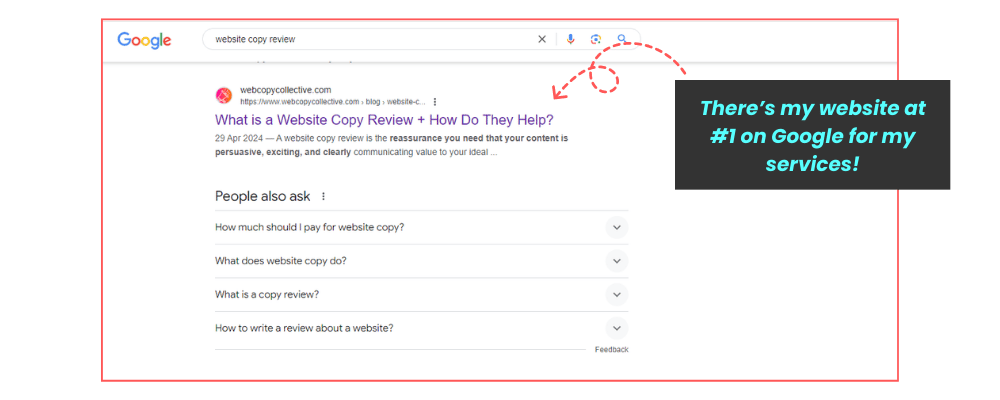
Each new blog is an opportunity to target a keyword your potential customers are searching for, giving you better organic search results.
Just make sure you’ve optimized your blog SEO to help your blog writing rank in searches.
Make Clients Stick Around Longer
Potential customers will stay on your site longer if there’s more to look at. If you have a catalogue of informative, engaging blog posts for them to read, they’ll hang around and devour everything — especially if you’ve done a good job at targeting a niche.
Most of your potential clients will be in the awareness phase, which means they’re looking for solutions to a problem they have.
High-quality blog writing shows them you have solutions, and they’ll soon see you’re the person they want to do business with.
Flip that, and imagine a potential client stumbling on your website and not having much to look at.
They’re not going to have time to build trust with you and are more likely to click away.
When adding blogs to your website, remember to go through a website content checklist to ensure the rest of your website is optimised for sales!

Build Trust with Potential Clients
It’s tough for people to trust us freelancers. We’re usually unknown, and no one is really sure we deliver the value we promise.
It’s almost unheard of for a client to land on your website and want to hire you after scrolling through one service page. Instead, they’ll click around and see what you have to offer.
The more blog posts you have, the more they’ll begin to trust you.
While blog writing for SEO can feel like wasting valuable client time, you’re actually investing in future clients who don’t know you yet.
Constantly Fresh Marketing Materials
Ever been stuck on what to share on your social media platforms? Marketers tell us to regularly update Pinterest, TikTok, and other social channels to stay relevant, but coming up with daily posts can be tough.
Regular blog writing for SEO gives you more content to share on social media. There are only so many times you can share a service page before people get bored.
Blogs are valuable, content-rich marketing materials that can keep a steady stream of visitors coming back to your website every month.
Help Local Clients Find You
Did you know you can geo-tag your blog posts?
This adds your physical location to your blogs, helping them appear in more local searches. Blog writing for SEO is one of the main reasons most service providers commit to regular content.
If you like working with local clients, this is a quick and easy way to help you connect with locals. You can include town or city names to help you show up in those searches.
This is also great if you live near a major city and want to target remote clients there.
Establish Authority as a Service Provider
I used to suffer from extreme imposter syndrome when I started freelancing. What on earth gave me the right to offer services to others? And take their money?
I felt like a fraud. And boy, did I undercut myself for far too long.
Creating consistent blog posts not only showed my clients that I was a pro, it showed me I was, too.
Blog writing for business is an opportunity to showcase your expertise and establish authority with potential clients.
A website filled with informative blog posts that answer common questions will immediately be perceived as an authority site.
Clients love getting stuff for free, and a well-stocked blog is like a treasure trove of free information. Answer FAQs, post how-tos, give away free guides — this all adds even more value to your paid services.
Prime Clients to Work With You
If you get a lot of emails with the same questions from clients, blog writing for business is a huge time saver. Most services require some form of prep work:
If you’re a graphic designer, you need brand colours, icons, fonts, and all that other beautiful stuff that goes into design.
If you’re a coach, you might have client worksheets, homework, and prep work.
If you’re a nutritionist, you probably like food diaries, calorie info, and exercise regimes.
You get the idea. Having a blog to refer to will save you time answering FAQs over and over and can help prep your clients to work with you.
There’s nothing better than a client reaching out to you and starting the conversation with, “I’ve read your blogs, and I’ve got all the materials I need to start using your services; when are you free?”
Blogging Writing Builds the Kind of Authority You Can’t Fake
For service-based businesses, blogging isn’t just a visibility tool — it’s a credibility engine. It positions you as the expert, answers questions before sales calls ever happen, and creates a long-term stream of traffic that compounds month after month.
When you treat your blog like a strategic asset rather than a marketing chore, it becomes one of the most reliable ways to attract clients who already trust you, understand your value, and are ready to invest.
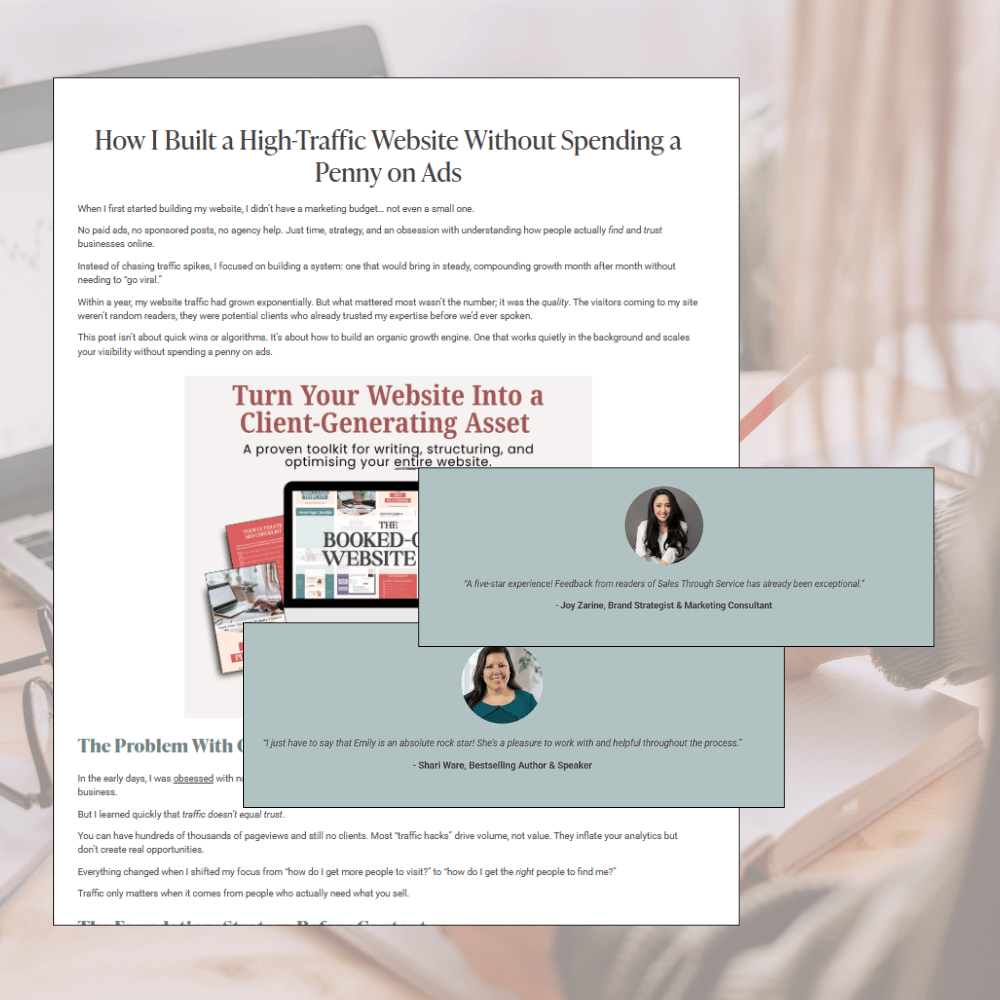
If you want to build a blog that works at that level (one that’s structured, strategic, and rooted in real SEO) the Booked-Out Website Kit gives you the templates, planners, and frameworks to make it simple.

About the Author
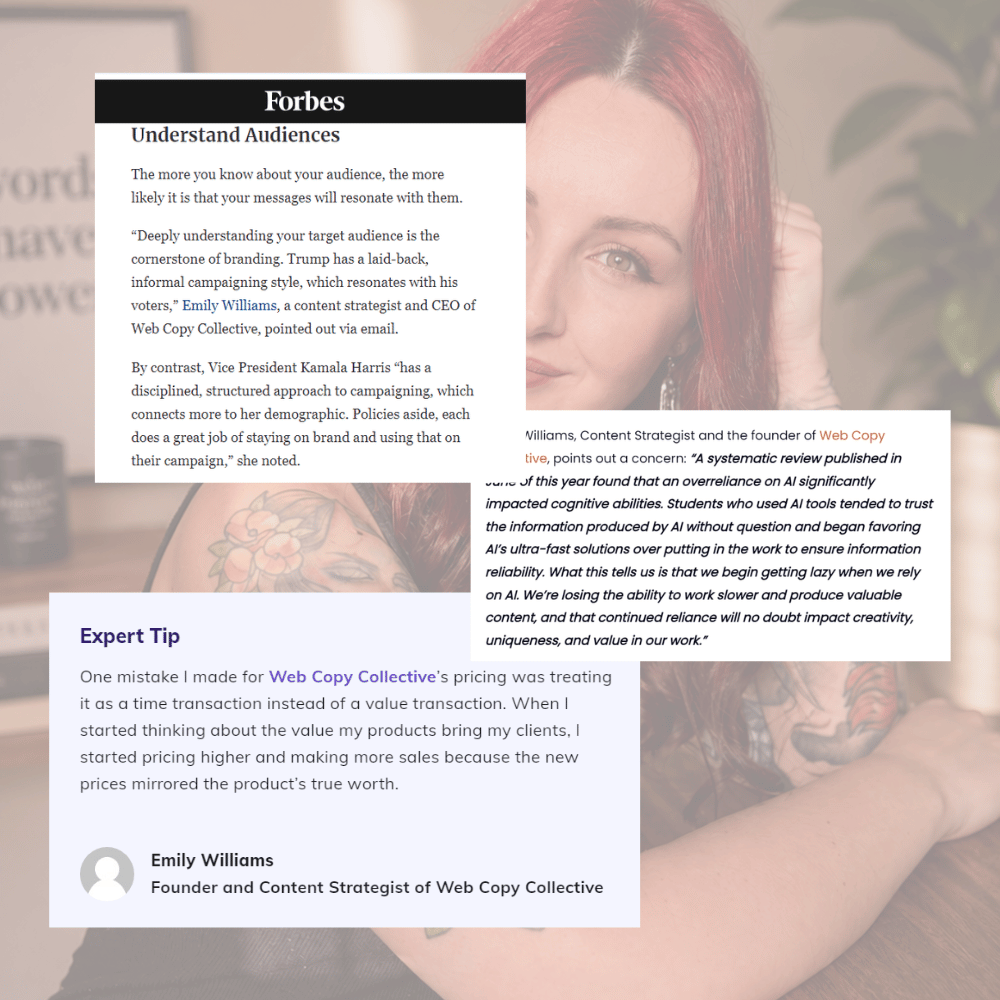
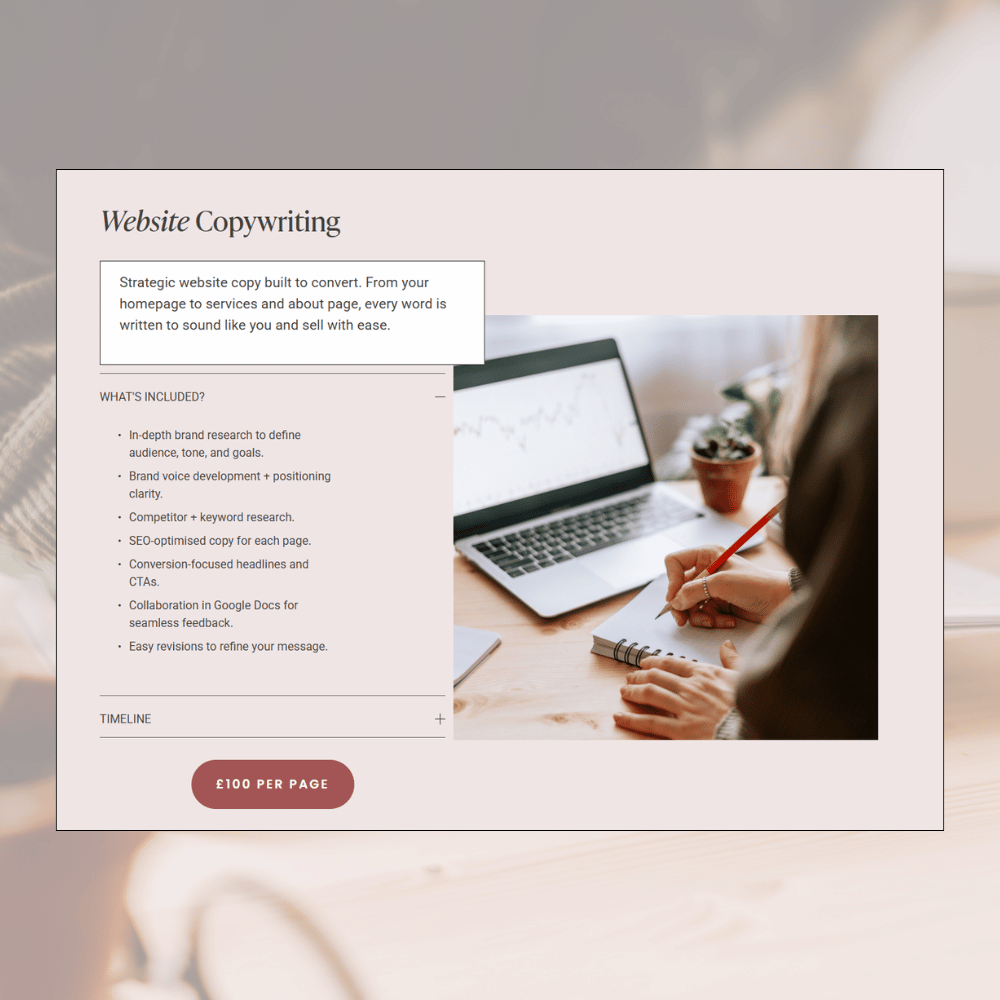
Emily Williams is a Content Strategist and the founder of Web Copy Collective — a boutique content studio helping service-based businesses and growing B2B brands turn their websites into high-performing growth assets. She specialises in SEO, strategic blogging, and conversion-focused copy that drives visibility, authority, and results. Explore her services here →