
How to Boost Traffic for Free: easy tips that actually work
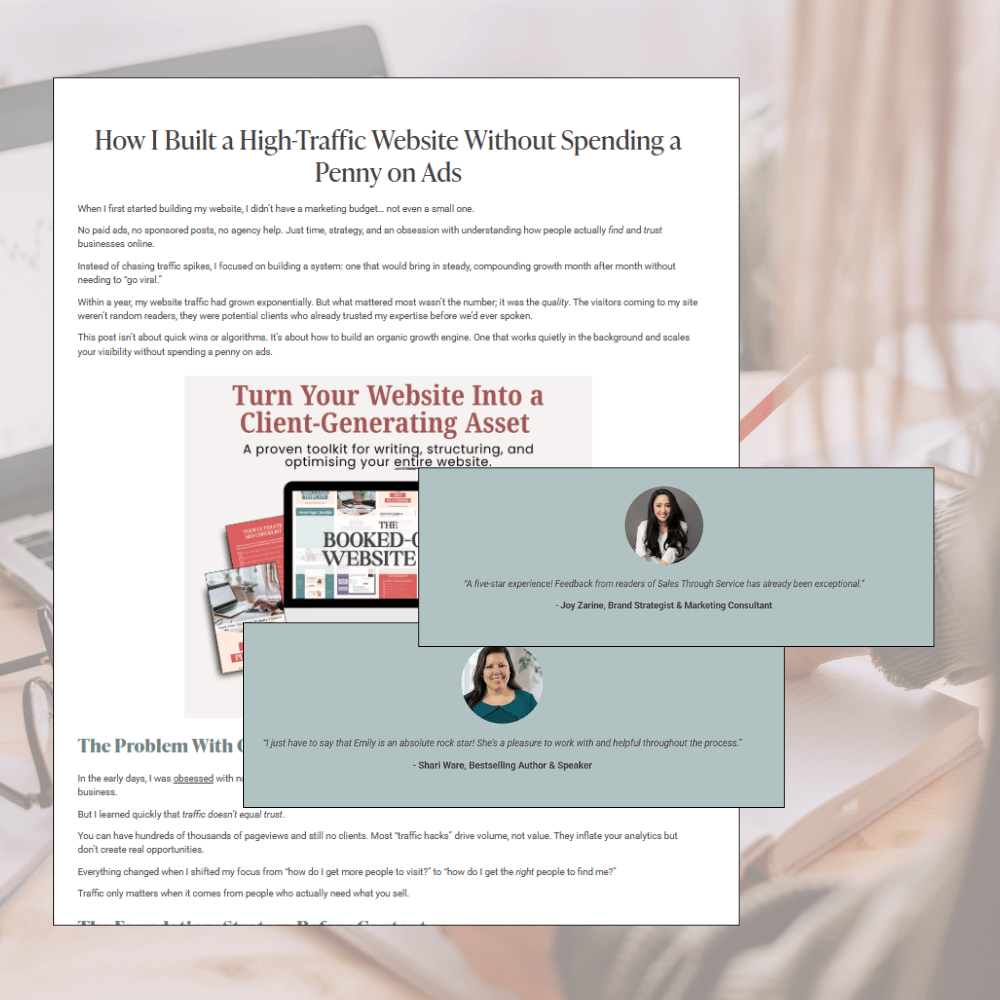
When I first started building my website for booking editing (yes, I was a non-fiction editor back in the day), I didn’t have a marketing budget…not even a small one. I was paying my bills with good vibes.
I couldn’t pay for a marketing agency or Google ads. I just had oodles of time (because clients weren’t exactly lining up yet) and an obsession with understanding how people actually find businesses online.
So, I went all in with SEO, content marketing, and learning what boosts traffic for free. And within a year, my website traffic was taking off. Potential clients were finding my website, enjoying my content, and hiring me.
And it all came down to a consistent content marketing strategy. One that was built on experience and some serious trial and error.
This post is all about the strategies I used to boost website traffic for free. And I’m giving you all my traffic building tips, so this is a long value-packed post.
DIYing your website copy & SEO doesn’t have to be overwhelming.
The Website Growth System walks you through how to write high-converting copy and optimise your entire website so you can confidently boost traffic, inquiries, and sales. Packed with templates, copywriting scripts, and tutorials, it’s everything you need to make your website shine on a budget.
Quick Note on Boosting Website Traffic for Free
Before we dive into the juicy tips and strategies, I want to make something clear: traffic, without strategy, isn’t the goal.
You could have 10K daily visitors but if they’re not ideal clients, it’s not going to convert into sales.
That’s why you’ll never see me promise thousands of daily visitors or guaranteed top spot on Google. We’re aiming for quality over quantity with our traffic-boosting strategies.
Easy Ways to Boost Traffic for Free
Boosting website traffic for free is about optimising your SEO, creating high-value content, and building links. Let’s dive into the actual steps you can take right now to boost traffic and get more client inquiries.
1. Find smaller, niche keywords to optimise for
When I was trying to grow my book editing business, I was never going to rank on Google for “professional book editor”. That’s a competitive keyword that huge businesses are paying serious money to own.
So I went niche with my keywords.
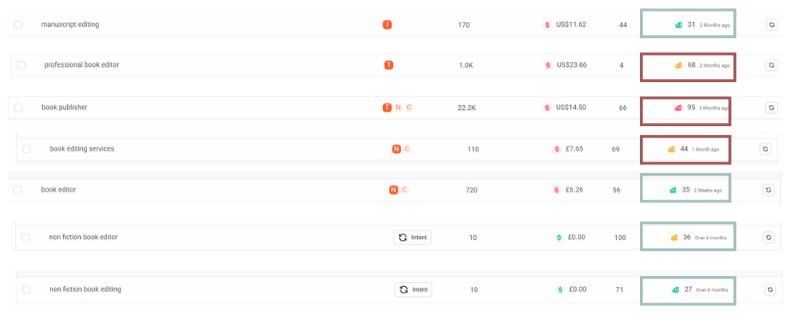
And this is still a foundation of my SEO today. I use UberSuggest to find low-competition keywords with an organic SEO difficulty below 40, and I optimise my content for those words.
You can see that one of the keywords only has 10 monthly views — I don’t care about low traffic. I would much rather those 10 people find me knowing I’m the exact service they are looking for.
2. Write high-quality blog content every single month
Google won’t rank your homepage or service pages for keywords. They’re not informative enough and don’t really answer specific questions people are typing.
So, you need consistent, high-quality content every month to give Google something to rank.
And I’m not talking thin, AI-generated blogs anyone could write. You need solution-focused blogs that answer specific questions your ideal clients are searching for.
How-to blogs
Tutorials and walk-throughs
Thought leadership and opinion pieces
Newsworthy topics relating to your niche
A lot of my clients worry about giving away too much value in their blog, but there’s no such thing. Pouring value into your free-to-read content is how you show how valuable your services can be.
“But Emily, if I post detailed tutorials, won’t my clients just DIY it instead of hiring me?”
Nope! Your ideal clients want a professional. They want someone to take away the effort of doing the thing themselves. You’ll never lose your high-value clients to detailed DIY guides.
But you will start boosting traffic for free by posting them.
3. Add ALT text to all your images
This one is a nice easy SEO boost. Google can’t “see” your website graphics, so ALT text explains what the image is.
Make sure you include the keyword from the page, and make it a genuinely helpful description of what’s happening in the photo.
So, for a selfie on my About page, instead of “photo of woman”. I might use “photo of Emily Williams, professional copywriter and content strategist”.
4. Add loads of internal links
Internal links are how Google (and visitors) navigate your website. If you don’t have enough internal links, it’s tough to find all the pages on your website, so your SEO score drops.
Make sure the anchor text of the link is keyword rich.
Make sure each blog has at least ten internal links leading to it (the more the better).
Link to both blog posts and your core pages (about page, services, shop, etc.).
5. Get backlinks from other websites
This is one of the most effective strategies for boosting traffic for free. Backlinks tell Google that other websites know you and trust you, so they are a huge ranking factor.
But the type of backlink matters. Links from low-quality, spammy websites will hurt your chances of ranking. So, aim for links from high-quality websites.
I have an entire blog post on how to build backlinks here.
6. Add an FAQ to the end of each blog
A quick round up of frequently asked questions at the end of each blog is a great SEO booster. These also tend to get picked up by LLMs, so they’ll help you get featured in AI answers as well.
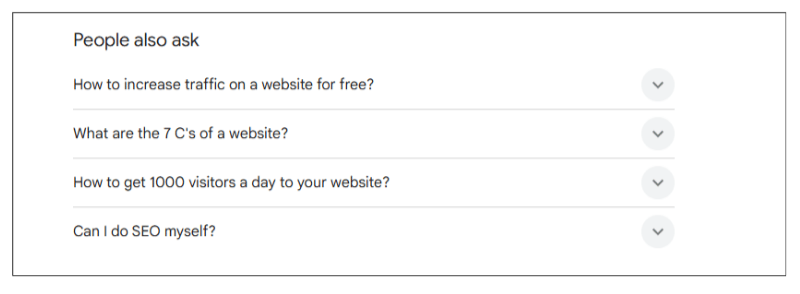
If you’re struggling with coming up with questions to add to your FAQ section, type your blog title into Google and see what comes up in the “People Also Ask” section. Use those exact questions and answer them with a quick paragraph.
7. Make your website mobile friendly
If your website isn’t already optimised for mobile screens in 2026, where have you been? More than half of your visitors are finding you on their phones, so your website has to look good on a teeny screen.
Google prioritises mobile-responsive websites, so if yours doesn’t automatically adjust and look good on a smaller screen, you won’t see any meaningful boost in traffic.
My website is hosted on Squarespace, which has options for editing both the full screen and mobile version of the website so they both look good. For WordPress, you’ll need to make sure you have a responsive theme so your pages automatically adjust.
8. Check for Google indexing issues
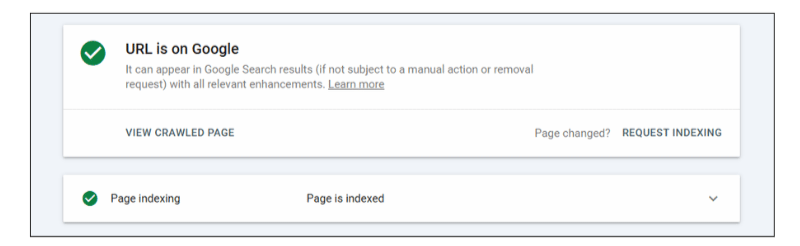
If your website isn’t indexed with Google, it can’t show up in searches at all. So, use Google Search Console to make sure your website is indexed and to check for any issues preventing pages from being indexed.
It took me so long to realise my website wasn’t indexed with Google, and before I knew that, I was pulling my hair out wondering why I wasn’t getting any organic traffic.
Sometimes it’s the things with the easiest fixes that make all the difference for boosting website traffic.
9. Add a expert-led About page
Google uses your About page as an authority signal. So, you need a dedicated About page that tells your brand story and clearly explains why you’re an expert and trusted service provider:
Certifications and qualifications
Years of experience
Big wins and results-driven case studies
Number of clients worked with or features gained
Client testimonials
Anything that tells Google and your potential clients that you’re an expert should be on your About page.
Here’s an entire post on how to write an About page for specific examples!
10. Use clean URL slugs
Long URLs reduce your SEO. So, if you have any pages or blogs with URLs that look like this:
yourwebsite.com/page?id=4728-blog-seo-tips-that-help-boost-traffic
Now is the time to update them to something like this:
yourwebsite.com/seo-tips
Once you’ve updated your URLs, use a free broken link checker to go back and update any internal links that no longer work.
11. Create location-specific service pages
If you work locally, create unique service pages that target specific locations.
I’m based in South Wales, so if I was looking for local clients, I’d create pages with H1 titles like:
“SEO Services in Cardiff”
“Website Copywriter in Bristol”
“Business Copywriter in Newport”
Location-specific keywords are usually easier to target because there’s less competition, and it can help you establish yourself as a local expert.
Even if you’re an online service provider that doesn’t need local clients, wouldn’t it be great to connect with local clients? Establishing strong local brand recognition can help boost traffic on a larger scale down the line.
12. Improve your website footer
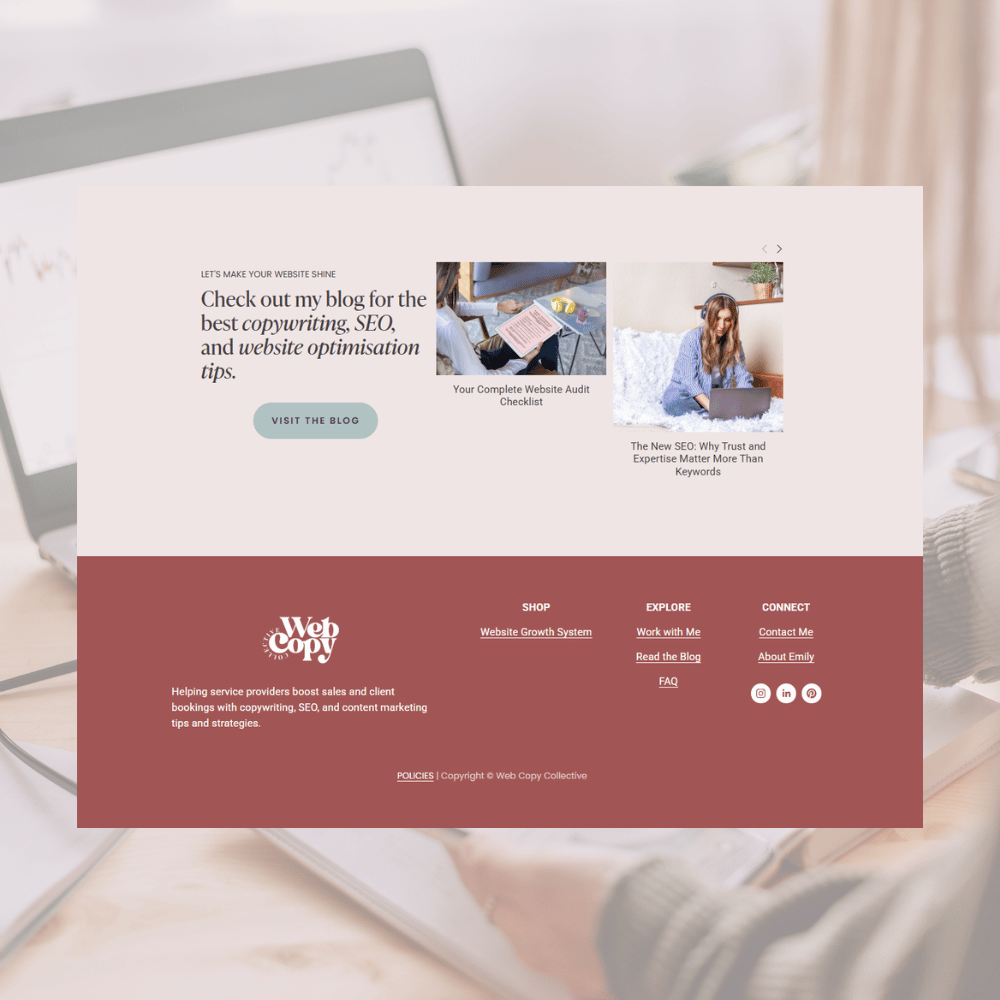
Your website footer is valuable SEO space. It appears at the bottom of every page, so it’s the perfect place for links and SEO information.
Here’s everything I check is included when auditing client websites:
Navigation links to all main pages
Social links
An SEO-optimised business description
A link to policies and T&Cs
Contact info
This is the part of your website where all your most important information should live. And since it’s right at the bottom of your website where it’s not taking up real estate at the expense of other sections, the more useful information the better.
13. Keep refreshing your website content
If you haven’t updated your website pages or blogs for months or years, Google will think your website is abandoned. And it’s never going to rank a website that doesn’t look active.
Consistent activity shows your website is updated, loved, and relevant.
So, regularly refresh your blog content with new insights, update your service page with fresh copy, and spring clean for broken links or missing information.
Want to Boost Traffic for Free the Easy Way?
There’s no magic formula for skyrocketing website traffic overnight. But if you implement all these strategies, you’ll see consistent boosts in your website traffic without paying a penny for ads.
And if you want even more specific strategies? I’m talking my exact outreach templates for backlinks, copy formulas for core pages, and SEO walkthroughs to optimise your entire website, you need the Website Growth System.
It’s all my website traffic boosting strategies bundled into one super affordable, DIY-friendly package. Check out what’s included here ⟶
What do you want to learn next?












FAQs on boosting website traffic
-
Google Analytics is the best tool for tracking website traffic. You'll get data on keyword rankings, website traffic sources, bounce rate, and more.
-
You need about 2K daily visitors to make $10K a year from Google ads. For small business owners, that's a great starting goal for website traffic.
-
Google has the most website traffic, with over 175 billion monthly visitors. YouTube comes in second with 113 billion monthly visitors.
